
An Interview with Sandra Beasley

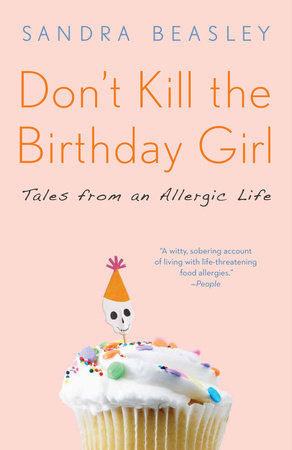
Sandra Beasley is a prominent DC-based writer and activist who has published four poetry collections and a memoir. She often centers disability at the forefront of her work, combining personal experiences and factual components to achieve her signature style, yet doing so in a way that feels fresh with each work. Though rooted in through lines such as disability and historical memory, her poetry collections each tackle different themes; Theories of Falling (2008) examines spiritual falling and the physical pain/pleasure of living, I Was the Jukebox (2010) explores themes of perspective and voice through personification, and Count the Waves (2015) represents the relation between intimacy and distance. Her most recent poetry collection, Made to Explode (2021), incorporates personal history while interrogating America’s complex and racist legacy. Her nonfiction book, Don’t Kill the Birthday Girl (2011), blends memoir and cultural history of food allergy into a witty and informative recounting of an allergic life. With history as her guide, Beasley helps readers better understand the world around them and asks them to take a sharper look at their role as activists in the world.
Emily Lapomardo: You mention in Don’t Kill the Birthday Girl that food allergy is such an evolving field of study, and cite a number of studies for which the findings had not been published at the time of DKTBG’s release. If you were to add a new chapter today, or mention new research, what might it include?
Sandra Beasley: First, I just want to say thank you for the opportunity of this interview!
When we finally got results from Dr. Gideon Lack’s LEAP (Learning Early About Peanut Allergy) study, which was still in progress when I published my book, it affirmed that early introduction of peanuts, particularly for infants at greater risk of food allergy, can make a huge difference in protecting against the development of peanut allergy. Additional studies have shown that this is probably true for egg, and other commonly allergenic foods. The general advice is to “eat early,” and “eat often,” because frequency of exposure is an important factor.
That’s just the first answer that comes to mind. My recent job was messaging for a nonprofit dedicated to serving food allergy patients. So, I could list numerous legislative shifts, medical innovations, and manifest improvements in education and awareness since 2011; plus, I have a new depth of knowledge based on seeing things through the lens of my colleagues.
Yet the earned experiences that I brought to the job proved to be just as critical to my understanding of food allergy as subject matter expertise that I acquired while on the job. For example: while the “eat early, eat often” messaging is widely available, what’s not widely available is guidance for potential parents like me, on how to practice early introduction for the sake of their infants with foods that they themselves are allergic to. And that’s part of why I have chosen not to have children, which the closing chapter of my memoir left open-ended.
Our understanding of food allergy will get so much more nuanced if adults living with food allergy speak up, versus exiting the conversation once they feel confident in controlling their disease for themselves, usually through allergen avoidance. For example, the current research around the intersection of food allergy and eating disorders, such as ARFID, focuses almost exclusively on young children. But there’s an important and substantial conversation waiting to be had around later-life disordered eating—again, based in part on personal experience, which I only partially disclosed in the memoir. Honestly, there is a book’s worth of post-DKTBG material to be written, and that’s something I’m weighing and working through now.
EL: In your poetry collection, Made to Explode, you use historical monuments/contexts as jumping off points to confront America’s fraught legacy. Can you tell me more about the perspectives and/or insights that approach opens up for you?

SB: I grew up in Virginia as the daughter of a decorated military veteran, and with frequent visits to Washington, D.C., where I live now. I have a deep familiarity with the lexicon of monuments and memorials. Beginning in college, I began to understand the ways that “history” reflects a culture and is written to shape the future; it does not necessarily mirror full fact.
In other words, monuments and memorials are as interesting for what they leave out or obscure, versus what they include. That inspired the prose poems that anchor a section of Made to Explode. (You can also see some early hints of that awareness in I Was the Jukebox, my second collection—particularly the poems “Antietam,” “Cast of Thousands,” and “The Parade.”)
The poem that looks at the FDR memorial, “Roosevelt, Midnight,” zeroes in on the handling of Franklin D. Roosevelt’s significant disability from 1921 onward, which is usually attributed to polio, and which included paralysis from the waist down. I remember J. Carter Brown, when he spoke to my college debating society at the University of Virginia in the late nineties, reflecting on the Commission of Fine Arts’ deliberation over whether and where to portray the president in a wheelchair as part of the memorial’s design. There’s also the strangeness of how tactile dots are deployed, primarily as an element for show versus in a usable manner.
I had the pleasure of touring the memorial with “Tipsy Tullivan,” a.k.a. writer, performance artist, and disability rights activist Cy (Jillian) Weise, which you can find on YouTube.
EL: As a disabled person engaging with activism and representation, I am constantly learning and relearning as information and activism evolves. You have been writing and doing advocacy work for a substantial amount of time, so I’m curious: what has evolved for you over that time and what has remained constant?
SB: I can’t narrate it as an “evolution,” but I can describe some key tectonic shifts.
First: I’m so glad I got to be part of a beautiful, self-empowering cohort of disabled, predominantly American literary activists in dialogue with one another from 2015 to 2020.
I’m not offering those dates as a start and end point for the work; the work goes on and on and always will. But I’m saying that 2015 is when I first began to consistently self-identify as “disabled,” versus simply being a woman living with life-altering food allergy. We actually created change in those years in terms of broadening the celebration of openly disabled writers and disability representation in college and university creative writing—I genuinely believe that—and on the level of how the Association of Writers and Writing Programs (AWP) conducts their annual conference, though that is a highly flawed and inconsistent space. Then came 2020.
2020 kicked off a time of severe disruption because of the COVID pandemic. (I feel a little silly observing that, but who knows who will come across this interview years from now?) Yes, there was a shift to creating virtual events, which benefit many in the disabled community and beyond. But they don’t work for all disabled folks. In-person events, when possible, adopted masking (some still use it), which isn’t always equitable for those with impaired auditory access or certain types of neurodivergence. Not to mention the exacerbating psychological and economic costs related to being sick, or managing anxiety over getting sick, which affects everyone.
Then, in 2022, my husband had a catastrophic medical event that plunged us both into the world of hospitalized care. He is experiencing a form of late-life disability that’s very different from mine and has required medications and surgical interventions. The reality was that the energy it has taken to redefine and affirm our marriage, and to build a household of two disabled partners, has consumed energy I might have directed outward as an activist in the past few years. I also left teaching, which had always given me some “down time” between semesters, and took on a demanding year-round job as part of shifting to being the sole income provider.
Here we are. I mourn the people who aren’t with us, such as Richard McCann and Alice Wong and Kathi Wolfe. But I’m still here. And I’d like to raise my voice a little louder again.
EL: What message would you give to those with disabilities who are looking to get more involved in disability advocacy and activism?
SB: Showing up counts for a lot. Show up in the little ways on the days you’re low energy—which sometimes means admitting that you can’t literally “show up,” but doing what you can before and after to express support—and show up in the big ways when you have the bravery and the resources and you can. If you teach, bring disabled work onto the syllabus. If you have a bio, please consider using the word “disabled” or “disability” in your bio. If you use social media, alt text your images (it blows my mind that so many people still skip this over and over, especially on Instagram), and ask the organizations you are affiliated with to do the same.
Disabilities cut against one another in terms of needs and accommodations. Lead with love and generosity when you can, knowing most people coming to the table will experience a wave of embarrassment at the ways they’ve “screwed up” in the past. It’s hard to get to solidarity from a place of shame. That said, sometimes a sharper and unflinching critique is warranted.
EL: In terms of situating your experiences and your art within a broader context, what authors have been most influential for you?
SB: Every book that I’ve written has had a different constellation of influences, especially once I brought nonfiction into the mix. In terms of a writer who mentored me, whose work I know deeply, I would name Rita Dove. Her collection Sonata Mulattica is a masterpiece; she also models what it means to be a deeply good person in the world, which isn’t always the case of our literary heroes. I was lucky to be her student at the University of Virginia, and to have had amazing workshop-mates whose work I still read today, such as Kyle Dargan and Kiki Petrosino.
But you know who I read voraciously, when I was a kid checking out books from the library or buying dime paperbacks by the handful from the thrift shop? E. Nesbit and L. M. Montgomery. And later, Erma Bombeck and Stephen King. There’s no clean stylistic takeaway from that! Only the deep respect for any author who has the power to create worlds their readers can disappear in.
Also, if you think I just named a bunch of authors and not one disabled: think again. We’re everywhere. Some of us talk about our disabilities more loudly than others, but we’re everywhere.

Sandra Beasley is the author of four poetry collections—Made to Explode, winner of a Housatonic Book Award; Count the Waves, an excerpt of which won the Center for Book Arts chapbook prize; I Was the Jukebox, which won the Barnard Women Poets Prize; and Theories of Falling, which won the New Issues Poetry Prize—as well as Don’t Kill the Birthday Girl: Tales from an Allergic Life, a disability memoir and cultural history of food allergies. She edited Vinegar and Char: Verse from the Southern Foodways Alliance, and she serves as the poetry editor for the Southern Foodways Alliance’s quarterly journal, Gravy. She is also the poetry editor for Blair, a nonprofit literary publisher based in North Carolina. Honors for her work include a 2015 NEA fellowship, and six DC Commission on the Arts and Humanities fellowships. She lives in Washington, D.C.

Emily Lapomardo is a queer disabled writer and educator from the Boston area. She holds a Bachelor of Arts in English from the University of Massachusetts Amherst, and is currently pursuing a Master of Arts in English from Bridgewater State University. She believes in the power of advocacy, and showing up authentically in all areas of life. In her free time, she enjoys reading literature and raging against the patriarchy.