
A Review of Ellen Samuels' Your Body Should Be a Part of the World


Ellen Samuels’ new poetry collection, Your Body Should Be a Part of the World, explores themes of chronic illness and the natural world, drifting between and blending the two. The poems weave through hospital visits, procedures, reflections of scars (both physical and emotional), and moments in the garden. Another prominent theme in this work is survival, especially the complicated emotions that arise when considering the fact that “every year [the speaker] spend[s] more days in bed and fewer in the garden.” Introspection connects each component of this collection; it is not simply a matter of illness, survival, and tending, but rather the profound truths that are revealed in quiet moments in between these acts.
Tending the garden is a cherished act, one laden with meaning and potential. The garden poems are named after a specific vegetable or plant, such as “Plum Tomato” or “Sweet Basil,” but include the plant's binomial nomenclature just below the title, signifying the intersection of tidy scientific classification and a body and life that defy such easy categorization. Samuels outlines meaningful connections between the outer world and the tumultuous inner experience of the speaker. She gives voice to the daily existence of being chronically ill when she states, “The hospital is just a place I go sometimes when I’m well enough to leave my house.” This matter of fact statement neutralizes for the reader what is typically an anxiety filled moment for non-disabled people. The hospital is not something to be feared or dreaded, necessarily, but rather it is just a place the speaker goes when they’re able to leave the house. This distinction is an important one for documenting the discrepancies in how disabled people interact with daily moments compared with their non-disabled peers.
Yet Samuels does not shy away from also naming the frustrations and traumas that can arise within medical experiences: “when that doctor put his hands on me, he was not prepared, I was not prepared.” Documenting the feelings of exposure and dehumanization that can occur in clinical spaces, the speaker confides, “doctors began to turn my skin inside-out, to read it like a diary I didn’t remember keeping.” While diaries may hold valuable insight, the information they contain is often deeply personal, not meant to be experienced by anyone other than the author. The detail about not remembering furthers the tone of violation since it implies that these profoundly intimate details will be learned by the physician before the person whose body they belong to. This is a complicated reality because while there is a feeling of trespassing, there is also the possibility that what the doctors find within holds answers that could alleviate pain or provide clarity. Being comfortable in seemingly contradictory experiences is part of what defines this work. Having to navigate the dynamics between the worlds of “well” versus “ill” is something many disabled and chronically ill people have become experts at, not by choice, but necessity. The conversation between these worlds is one that carries throughout the work, and can be seen in how Samuels utilizes form.
Using both verse and prose poetry, Samuels blurs the lines between conflicting states of being (ill/well) by flipping the forms as she writes, candidly remarking, “Sick or well? … they are both. And like them, I have to find a way to live in both worlds.” Pushing back against the demand that people occupy one identity or the other, either sick or well, she drifts between the states as frequently as one might come in and out while tending a garden on a slow summer day.
This duality becomes a core component to the work as a whole, resisting the division that society often demands of the chronically ill. She muses, “I am they who surface the darkness between your words” and confesses, “I thought we’d created a new world, where the sick and the well could be citizens of the same country.” Hinting that perhaps these worlds are not so diametrically opposed, that it is in fact our choices that create either a unified or splintered society, these lines suggest that both are possible. Yet, by misunderstanding or excluding disabled people in favor of existing systems/structures that are deeply ableist, the splintering deepens, until there is an overwhelming feeling that the speaker names: “there is more to do for this world than to weep for it. But this is the work you are doing today”
Samuels chronicles the too-common frustrations chronically ill people face, noting in “In Answer to Your Question,” that “Yes, I have tried yoga. I have tried going gluten-free,” and yet, the speaker still finds themselves “rounding [their] arms to hold the answers [we] never wanted to hear.” In these lines, she skillfully captures the weight disabled people carry through a world not built for them and names what it costs when non-disabled people continue to look away from this hard truth. This collection is a comfort to those who have been carrying those answers, and a necessary read for those finally ready to receive them.
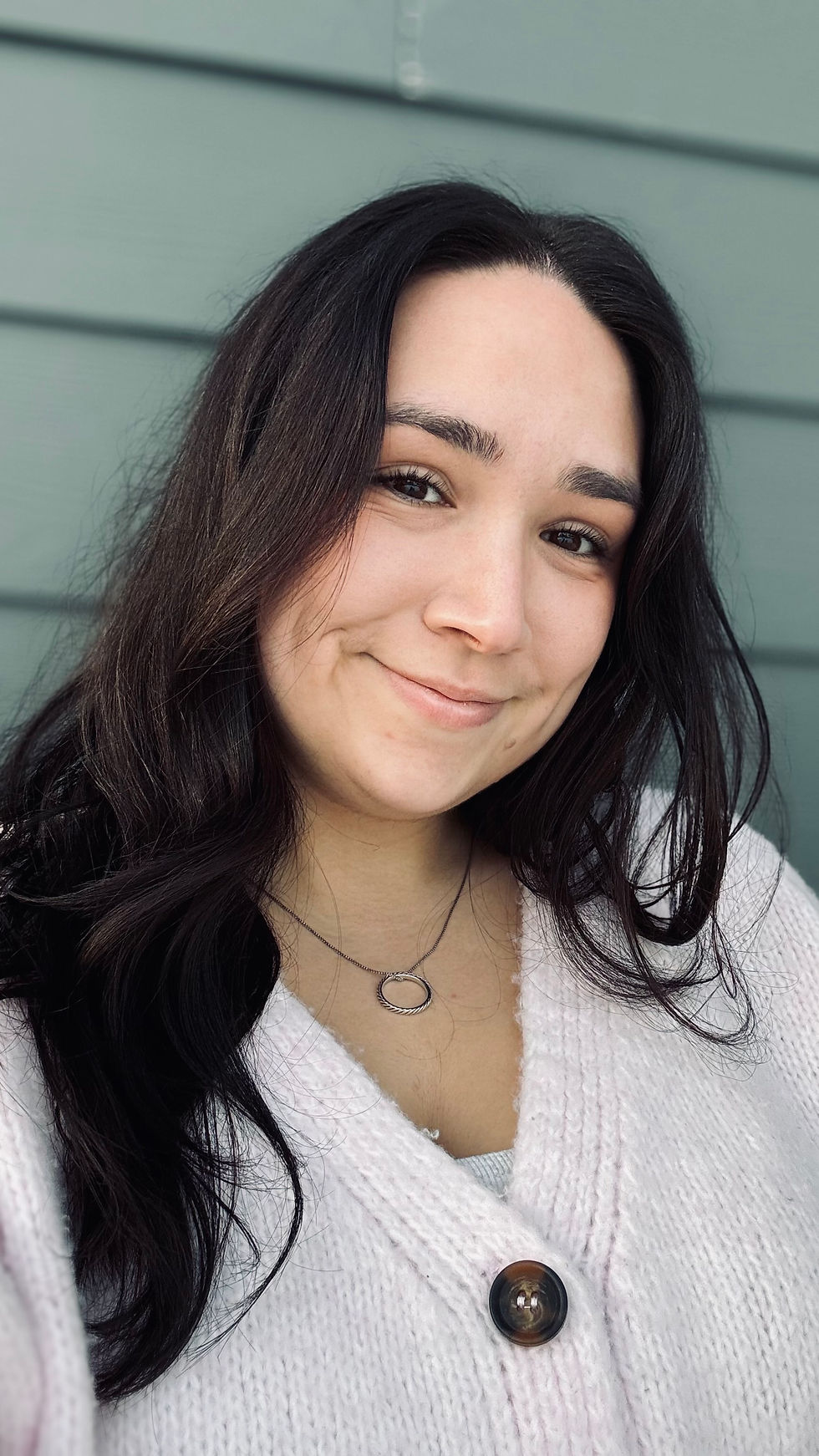
Emily Lapomardo is a queer disabled writer and educator from the Boston area. She holds a Bachelor of Arts in English from the University of Massachusetts Amherst, and is currently pursuing a Master of Arts in English from Bridgewater State University. She believes in the power of advocacy, and showing up authentically in all areas of life. In her free time, she enjoys reading literature and raging against the patriarchy.